
Zero-party data: the quiz advantage after cookies
Third-party cookies are disappearing, and the tracking that powered a decade of personalization is going with them. Brands that relied on following users around the web are scrambling for a replacement. Zero-party data is the better foundation hiding in plain sight: the answers a shopper hands a Quizshopping quiz directly, willingly, and in their own words.
Third-party cookies are disappearing, and the tracking that powered a decade of personalization is going with them. Brands that relied on following users around the web are scrambling for a replacement. There's a better foundation hiding in plain sight: data the customer hands you directly.
Third-party vs. first-party vs. zero-party data
The three are easy to confuse, so it is worth being precise. Third-party data is bought from someone who watched the shopper somewhere else, first-party data is what your own site observed, and zero-party data is what the shopper chose to tell you, which is the category Forrester named.
- Third-party data: collected by someone else (trackers, data brokers) and bought in. Disappearing with cookies and tightening privacy law.
- First-party data: what you observe on your own site, like pages viewed and past purchases. Useful, but it's behavior you have to infer meaning from.
- Zero-party data is what the customer intentionally and proactively shares: their goals, preferences, context, and pain points. You do not infer it, they tell you.
The term comes from Forrester. Of the three, zero-party data is the most accurate, because there's no guessing involved.
Why zero-party data wins after cookies
Zero-party data is durable, because there is no cookie or tracker to block. It is compliant, because the customer volunteered it. And it is accurate, because it was declared rather than inferred. Best of all, collecting it improves the experience instead of degrading trust, which is why Quizshopping asks instead of watching.
The problem: most brands don't ask
Brands collect oceans of behavioral data and still can't answer the one question that matters: why is this person here, and what are they afraid of? Analytics tell you what happened, not what someone actually wants. It is not a tooling problem either, because no dashboard can report a motive that was never spoken out loud, and most brands have simply never built a place where a shopper could say it. A Quizshopping quiz is that place.
The quiz is the best zero-party data engine
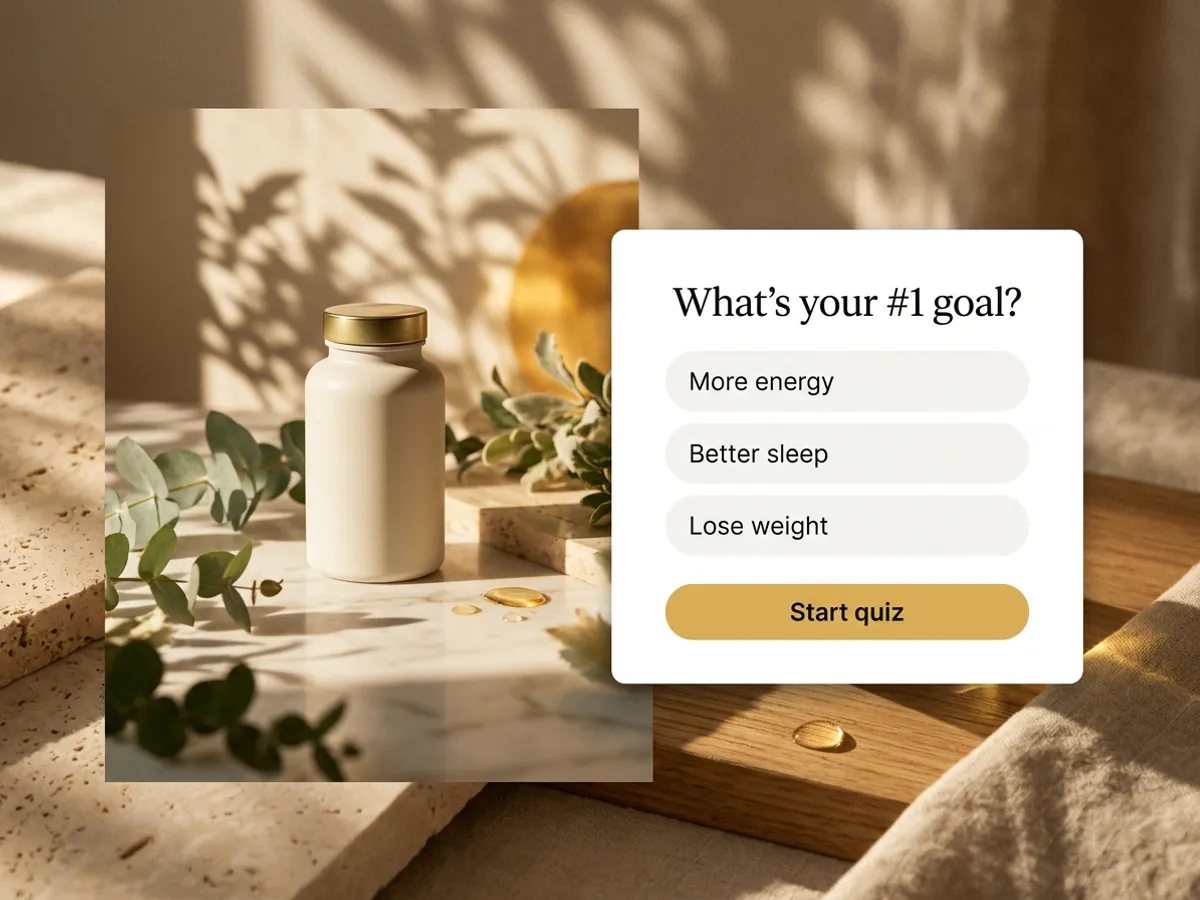
A persona quiz is purpose-built for this. A handful of well-designed questions get the shopper to declare their situation, desires, and pain points, in exchange for a recommendation that genuinely fits. The value exchange is fair, so completion rates stay high, and what Quizshopping stores is what the shopper chose to say.
- The shopper gets a personalized recommendation, not a generic catalog.
- You get declared intent and identity, the highest-quality data there is.
- Nothing depends on cookies or third-party tracking.
From data to personalization that compounds
Because the data is declared, you can act on it immediately, the right product now, and durably, by segmenting shoppers into personas and messaging them relevantly over time. Each interaction adds to a profile the customer helped build, which makes the next touch better instead of creepier. The Bloom a shopper leaves with is the start of that profile, not the end of it.
Stop inferring what shoppers want from crumbs. Let them tell you.
The takeaway
The end of cookies is not a personalization apocalypse, it is a forcing function to build on something better. Ask, do not track. Zero-party data is the foundation and a quiz is how you collect it at scale, which is why Powerable treats the quiz as the data layer and not only as the conversion layer.
See Quizshopping on your own traffic.
Turn the 95% who aren't ready to buy into a segmented pipeline.
Join the waitlist