
Psychographics vs. demographics: what actually drives the buy
Most targeting is built on demographics: age, gender, location, income. They are easy to measure, so we lean on them, but demographics describe who someone is and not why they buy. Picture an iceberg, where values, motivations, fears and identity sit below the waterline. The Brain reads what is under the water, because that is what closes the sale.
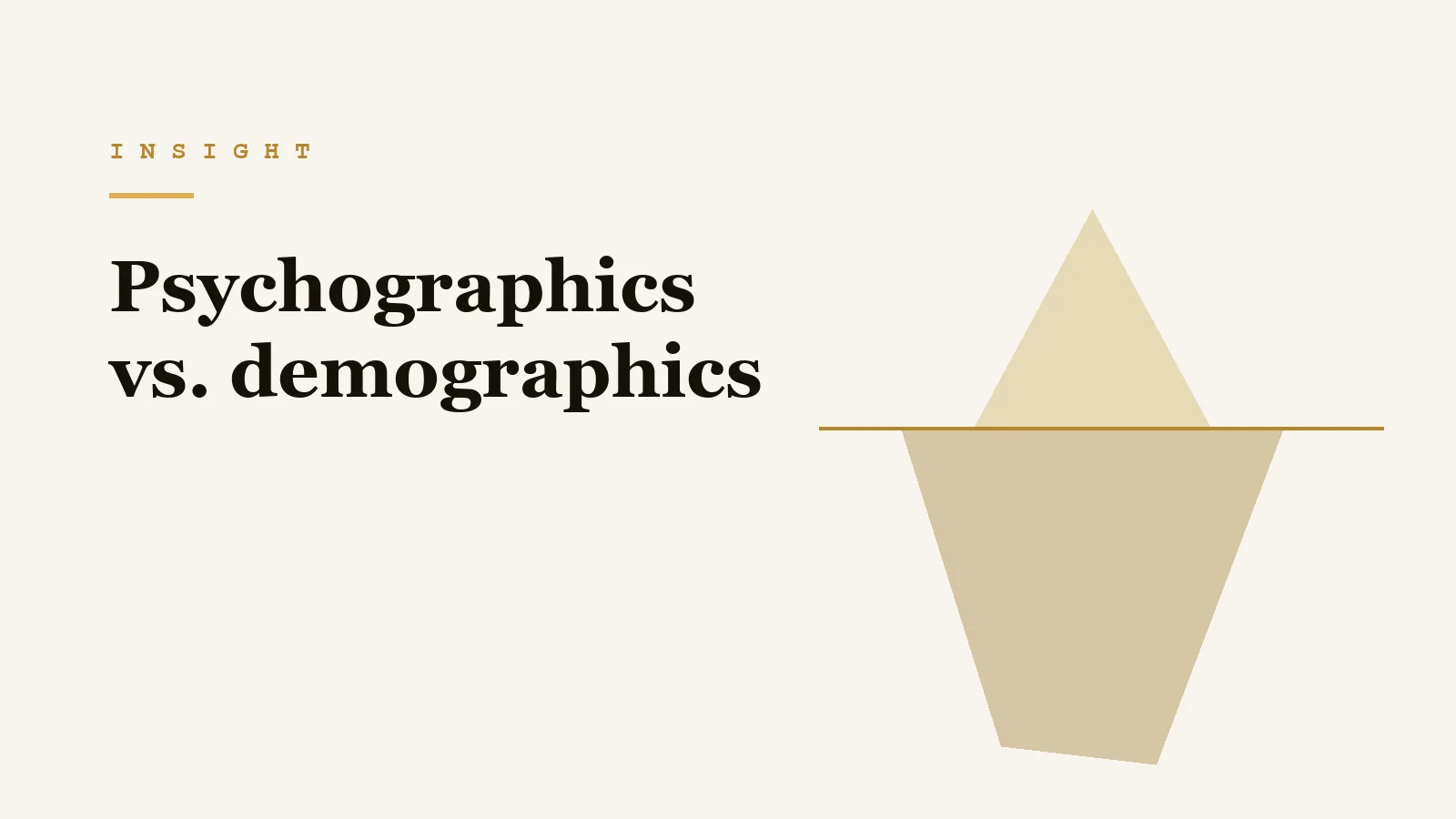
Most targeting is built on demographics, age, gender, location, income. They're easy to measure, so we lean on them. But demographics describe who someone is, not why they buy. And it's the why that closes the sale.
The iceberg
Picture an iceberg. Above the waterline is what marketers usually see: age, gender, location, income, job title, easy to measure. Below the waterline is what actually drives decisions: values, motivations, fears, identity, beliefs. Harder to measure, far stronger impact. The Brain is built to read what sits under the waterline, because that is where the decision is actually made.
Why demographics mislead
Two 35-year-old women in the same city with the same income can want opposite things. One buys for status, the other for sustainability. Demographics put them in the same bucket; psychographics tell them apart. Targeting the bucket wastes spend on people who'll never care.
What psychographics capture
- Values: what they care about and stand for.
- Motivations: the outcome they're really chasing.
- Fears: the doubt that stops the purchase.
- Identity: who they want to be seen as.
"I want to be like this" beats "people like me bought this." Identity-driven messaging converts because it speaks to the person someone is becoming and not to the box they were sorted into. Two shoppers of the same age, in the same city, on the same income can want opposite things, and only one of those facts is worth building a recommendation on, which is why the Brain reads values rather than census boxes.
How to collect psychographics at scale
You can't buy psychographics from a data broker, they're not observable. You have to ask. A persona quiz is built for exactly this: a few well-designed questions surface values, motivations and fears, then sort each shopper into a persona and speak to it directly. That is what a Quizshopping quiz does in the two minutes a data broker could never sell you.
Surface data helps you target people. Deep insight helps you move them.
The takeaway
Demographics tell you where to fish and psychographics tell you what bait works. Build your messaging on the why rather than the who, and the same traffic converts at a different level. The why is what Powerable collects with a quiz, because nobody sells it and nobody can observe it from the outside.
See Quizshopping on your own traffic.
Turn the 95% who aren't ready to buy into a segmented pipeline.
Join the waitlist